
Most supplement brands say the right things.
Clean ingredients. Quality sourcing. Tested for purity. These phrases appear on thousands of product pages. They cost nothing to write and require nothing to prove. The challenge is figuring out which brands actually mean it and which ones are using the language of transparency as a marketing tool.
It is not always obvious. But there are clear signals. Here is what to look for.
The Label Tells You More Than You Think
Start with the ingredient list. A transparent brand makes it simple.
Every ingredient should have its own line. Every amount should be listed individually. If you see a group of ingredients listed together under a single weight with no breakdown, that is a proprietary blend. You know what is in the product but not how much of anything you are actually getting.
A brand that has nothing to hide shows you everything. The ingredient. The amount. The source where relevant. Nothing lumped together, nothing obscured behind a creative name.
Also look at what else is in the capsule. Fillers, flow agents, and binders are common in mass-produced supplements. They are not always harmful but they are worth knowing about. A transparent brand lists them. A less transparent one buries them in fine print or leaves them off entirely.
Sourcing Should Be Specific, Not Vague
Most brands say their products are grass-fed or high quality. Very few tell you where the animals were raised, how the sourcing is verified, or what standards the farms meet.
Specificity is the signal. A brand that knows its supply chain can tell you about it. A brand that does not know, or does not want you to know, defaults to general claims that sound good but mean nothing.
For organ supplements in particular, sourcing matters more than almost any other category. The quality of the animal, how it was raised, what it ate, and how the organs were handled after harvest all affect the nutritional value of what ends up in the capsule. A brand confident in its sourcing talks about it openly.
Third Party Testing Is the Baseline
The supplement industry is not regulated the same way pharmaceuticals are. The FDA does not approve supplements before they go to market. That means brands are largely trusted to tell the truth about what is in the bottle.
Third party testing is how a brand proves it is doing that. An independent lab verifies that the product contains what the label says, at the amounts stated, without contaminants like heavy metals or harmful microbes.
Look for brands that publish their certificates of analysis. Not just a badge on the website. Actual documentation you can review. If a brand tests every batch and has nothing to hide, that information is easy to find.
Watch How a Brand Talks About Its Products
Language is revealing.
Brands that lead with outcomes, dramatic claims, and transformation stories are selling you something. Brands that lead with what is actually in the product and where it comes from are showing you something.
The supplement industry runs on aspiration. Bold claims and before-and-after stories move product. But a brand that respects its customer does not need to oversell. It lets the ingredients speak.
Pay attention to what a brand does not say. Do they make medical claims? Do they promise outcomes that no single supplement can guarantee? Do they use fear or urgency to push a purchase? These are signs that the marketing is doing work the product cannot.
What We Do at Primal Being
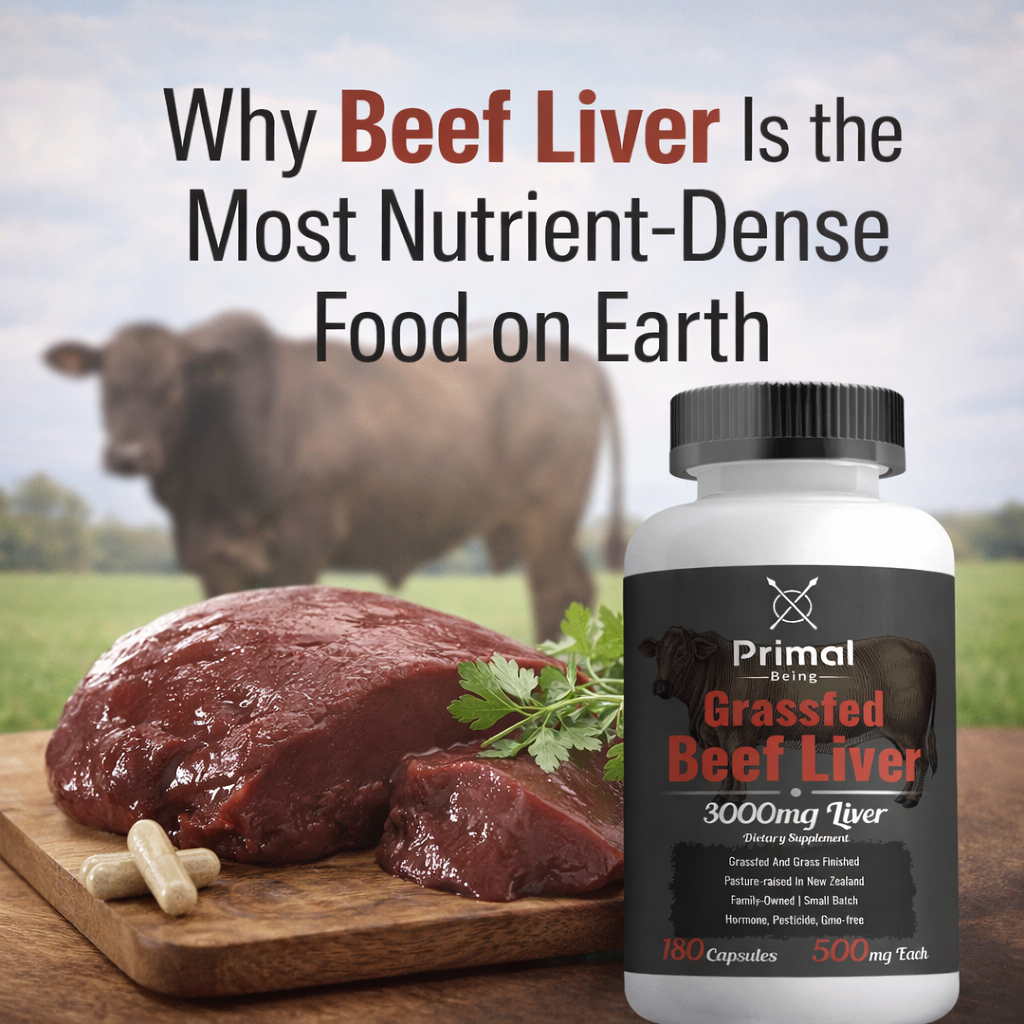
We make single ingredient supplements. Beef liver. Beef testes. Beef brain. Colostrum. Each one is exactly what it says it is.
We tell you what is in the capsule because there is only one thing in it. We tell you where it comes from because we know and we are proud of it. We do not use fillers because there is no reason to.
That is what transparency actually looks like. Not a claim on a website. A label that tells the whole story because the whole story is worth telling.
If a brand cannot tell you what is in the bottle, how much of it is there, and where it came from, that is your answer.