
Energy and liver
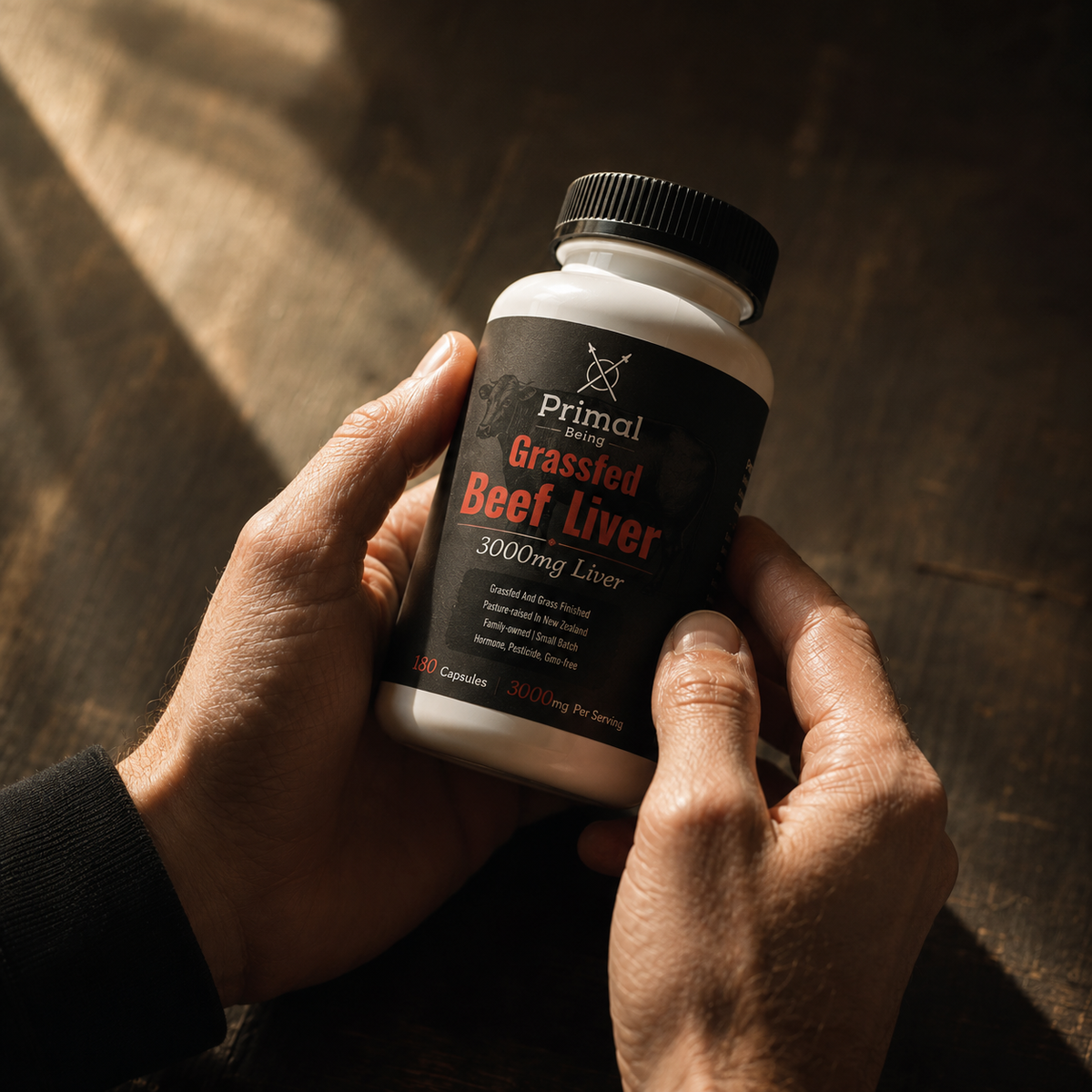
Why Beef Liver Is the Most Nutrient-Dense Food on Earth
Gram for gram, beef liver delivers more vitamins and minerals than any other food. Here is what is in it, why it works, and how to get it in without cooking it.
Cart
Your cart is empty
Straightforward guides to organ supplements, sourcing and the nutrients your body uses every day.
Gram for gram, beef liver delivers more vitamins and minerals than any other food. Here is what is in it, why it works, and how to get it in without cooking it.
Beef liver provides heme iron plus the vitamin A, copper and B12 that help your body use it. Here is how it compares with standard iron pills.
Colostrum supports the gut and immune system while collagen supports skin, joints and connective tissue. Here is how to choose.
The best collagen for joints comes from real cartilage and lists type II collagen specifically. Here is what to look for on the label.
Most collagen is type I and III peptides built for skin and hair. For joint support, look for type II collagen from real cartilage.
A good organ complex lists exact organ amounts, uses grass fed and grass finished beef, and is freeze dried. Here is how to check.
Supplements do not replace hormones, but they can support the body systems most strained during perimenopause. Here is what actually helps.
Beef liver supplements look alike but vary widely in what they deliver. Here are the criteria that separate a good one from the rest.
The method used to process organ tissue determines how much nutrition survives. Here is the real difference between desiccated and freeze dried.
The carnivore diet has gone mainstream. Here is what the current research shows and what it means for anyone eating mostly animal foods.
After 40, the way the body absorbs and uses nutrients changes. Here are the organ supplements that line up with what women need in this stage.
Organ supplements fill nutritional gaps with whole food nutrition, not stimulants. Here is what to expect and when.
Most liver supplements look the same from the outside. Here is what to check on sourcing, processing and labels before you buy.
CoQ10 levels naturally decline with age. Here is what that means for everyday energy after 40 and the food sources that provide it.
Processing determines whether the nutrients in an organ survive into the capsule. Here is why we only trust freeze drying.
The spleen supports immune defense, blood health and iron metabolism. Here is what it contains and why it is one of the five organs in our Organ Complex.
What women's bodies need at each stage of life, and why beef organs are one of the most concentrated food sources of those nutrients.
When rest alone does not fix tiredness, nutrition is often part of the picture. Here are the nutrients most closely tied to everyday energy.
Blueberries and salmon are only part of the story. Here is a more complete picture of the nutrients the brain needs after 60.
A label tells you what went into the capsule, not how much your body can use. Here is what bioavailability means and why it matters.
The memory supplement aisle is full of bold claims and thin evidence. Here is an honest look at what the research supports.
Animal fats were replaced by seed oils over the past sixty years. Here is what was lost along the way and how to bring it back.
Beef liver is rich in vitamin A. Here is what the research shows about whole food vitamin A and the specific situations where caution makes sense.
Grass fed is one of the most misunderstood terms on a label. Here is what it does and does not guarantee, and what to look for instead.
The brain has specific nutritional needs that do not decrease with age. Here are the foods that meet them most directly.
Choline is an essential nutrient most people under consume. Here is what it does in the body and the foods that provide the most of it.
A multivitamin label is not a guarantee of what your body receives. Here is why bioavailability matters more than the list on the bottle.
Most women's supplements are built around what sells. Here are the nutrients women's bodies actually need and where to find them in food.
What beef testes actually contain, what the research shows about zinc and male health, and why the honest case is stronger than the hype.
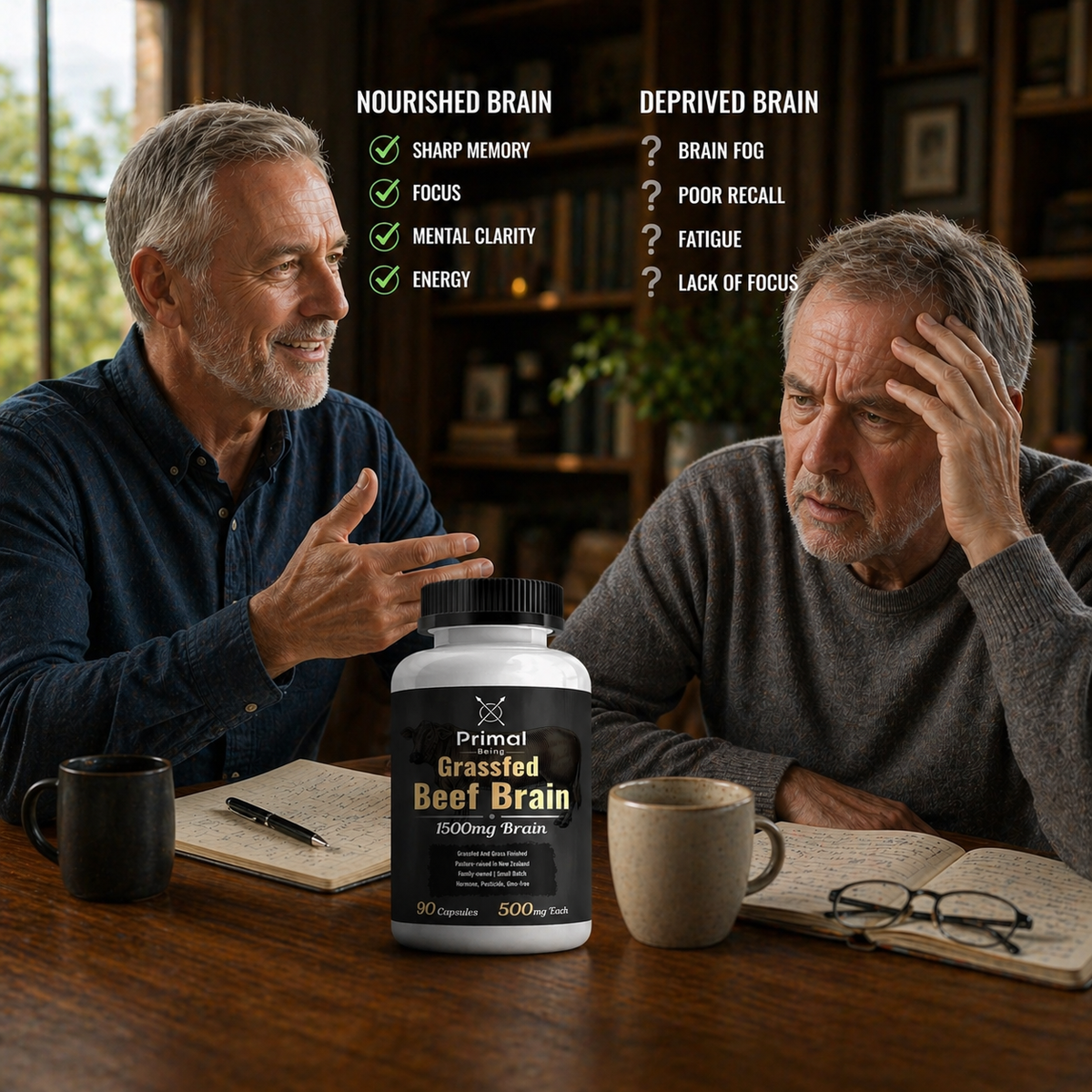
Brain fog after 60 is common, but it is often tied to specific, addressable factors like nutrition. Here is what may be behind it and what helps.
An honest guide to getting organ meats into your routine, starting with the ones that taste most like regular meat.
What colostrum is, what the research says about gut and immune support, and why processing makes such a difference in what you get.
Our ancestors ate the whole animal, and the organs came first. Here is what they valued and what most modern diets now leave out.
Most people eat more than enough calories but not enough nutrition. Here is what disappeared from the modern diet and why it matters.
Clean ingredients and quality sourcing cost nothing to claim. These are the clear signals that show which supplement brands actually mean it.
Gram for gram, beef liver delivers more vitamins and minerals than any other food. Here is what is in it, why it works, and how to get it in without cooking it.
Long ingredient lists are a sales strategy, not a sign of quality. Here is why single ingredient supplements are easier to understand and trust.
Proprietary blends tell you what is in the bottle but not how much. Here is why that matters and what a clear label looks like.
A look at the bovine uterus, fallopian tube and ovary nutrients in Female Vitality and how they support women's health at every stage of life.
Most collagen on the market is hydrolyzed hide, marine or poultry collagen. Here is why we chose bioactive, freeze dried cartilage collagen instead.
Grass fed, freeze dried organ supplements. Each one is a whole food, or a short list of them, with nothing added.
Shop all*These statements have not been evaluated by the Food and Drug Administration. These products are not intended to diagnose, treat, cure, or prevent any disease.