
Most perimenopause supplements do not balance hormones. Estrogen and progesterone decline is the actual driver of perimenopause symptoms, and only hormone therapy addresses that decline directly. What supplements can do is support the body systems most strained during this transition, which for many women makes a real difference even without changing hormone levels themselves.
That distinction matters, and most products on the shelf blur it.
What Is Actually Happening During Perimenopause
Perimenopause typically begins in the early to mid forties and lasts four to ten years. During this period, estrogen and progesterone do not decline steadily. They spike and crash unpredictably before eventually dropping. This is why symptoms feel random. One week is fine. The next brings disrupted sleep, mood swings, brain fog, and hot flashes that seem to come from nowhere.
This hormonal volatility affects more than mood and sleep. Estrogen influences insulin sensitivity, fat storage, bone density, and cardiovascular risk. Perimenopause is a metabolic event as much as a hormonal one, which is part of why the symptoms feel so far-reaching.
What Supplements Can and Cannot Do
The honest starting point is acknowledging the limits. A supplement cannot replace the estrogen and progesterone a body is losing. Hormone therapy is the only intervention that addresses hormone levels directly, and for women with significant symptoms, that conversation is worth having with a doctor.
What supplements can do is support the systems that hormonal fluctuation places extra demand on. The nutrients with the most consistent evidence are magnesium, which supports sleep quality and muscle function as estrogen's calming effects on the nervous system decline, creatine, which supports energy metabolism and has emerging research in cognitive resilience during hormonal transitions, and omega-3 fatty acids, which support mood regulation and help offset the inflammatory shifts that accompany declining estrogen.
Most of the herbal hormone balance blends marketed specifically for perimenopause, black cohosh, red clover, maca, chaste tree, have far less consistent evidence behind them despite dominating the supplement shelf. Some show modest benefit in individual studies. None reliably move hormone levels the way the marketing suggests.
Where the Nutritional Gaps Actually Show Up
Beyond the headline nutrients, perimenopause creates specific deficiency risks that are rarely discussed.
Many perimenopausal women experience heavier or more irregular periods before cycles eventually stop, which depletes iron stores and contributes to the fatigue, brain fog, and low mood that get attributed entirely to hormones. B vitamins support energy production, neurotransmitter synthesis, and hormone metabolism, and deficiencies are common and worsen with age. Choline supports brain function during a period when cognitive symptoms are among the most distressing complaints women report.
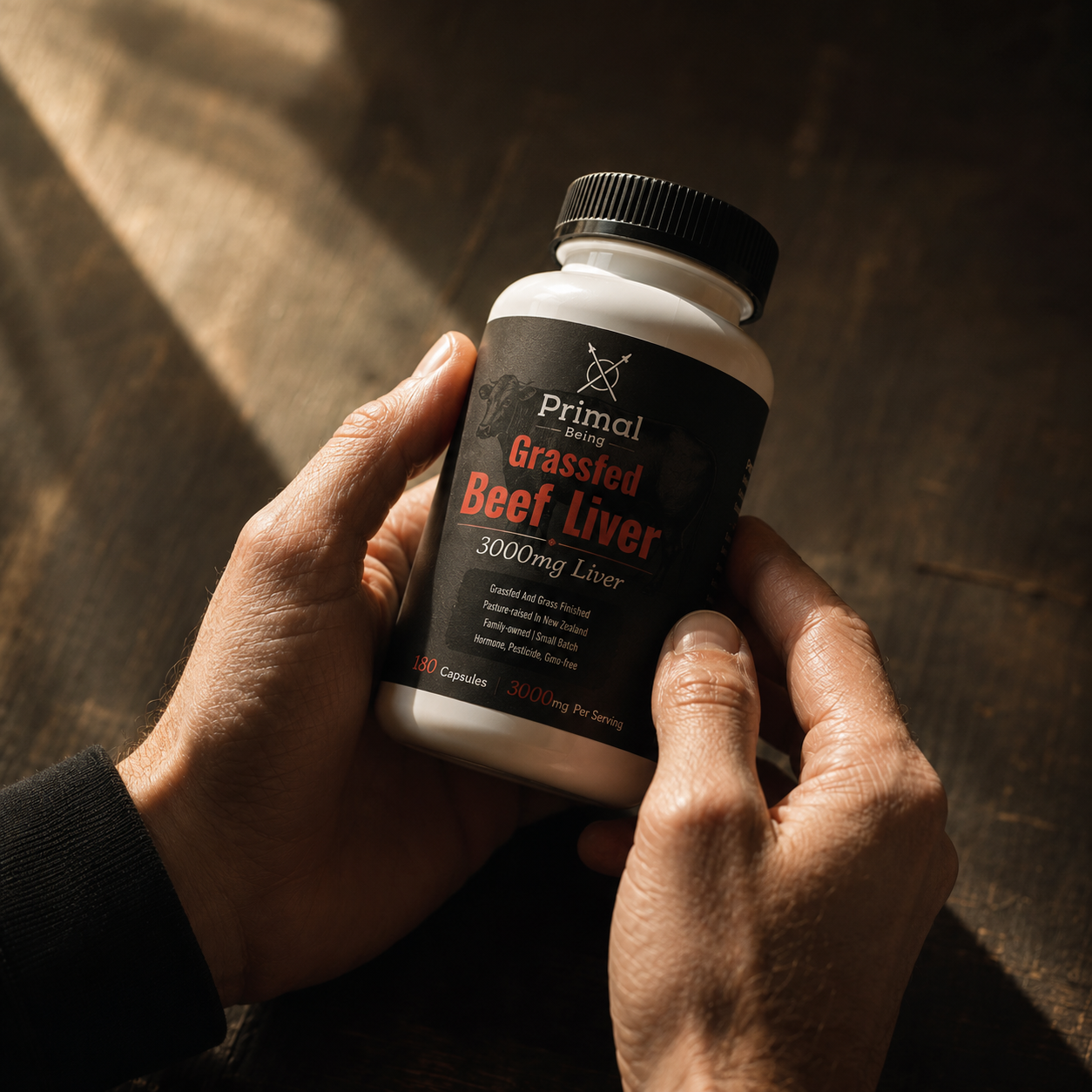
These nutritional gaps are addressable in ways that are more concrete than chasing a herbal hormone balance claim. Beef liver covers iron, B12, folate, choline, and copper more comprehensively than any single food, in bioavailable whole food form rather than the synthetic isolates found in most multivitamins.
Where Tissue-Specific Support Fits
Liver addresses the foundational nutritional layer. The hormonal transition itself involves the reproductive system specifically, the hypothalamus, pituitary, ovaries, and uterus, which is where the like supports like principle becomes relevant in a way no multivitamin reaches.
Our Female Vitality contains 100 percent pure grass-fed bovine ovaries, uterus, and fallopian tubes, sourced from New Zealand cattle and processed at low temperatures to preserve the peptide and growth factor profile. Reproductive tissue from healthy animals contains compounds specific to reproductive regulation, including peptides involved in follicle development and hormone signaling. These are not isolated synthetic ingredients. They are tissue-specific, present only in reproductive organs, and not something any standard supplement contains.
This is not a hormone replacement and it is not marketed as one. It is whole food, tissue-specific nutritional support for a system under real strain, which is a more honest and more limited claim than most products in this category make.
What Actually Makes Sense
Get a hormone panel before building a supplement protocol. You cannot optimize what you have not measured, and many women spend money on symptom-targeted supplements without knowing whether hormone therapy would address the root cause more directly and effectively.
Address the foundational nutrient gaps, iron, B12, folate, choline, magnesium, with whole food sources in bioavailable form. Consider tissue-specific support like Female Vitality for the reproductive system specifically. And have an honest conversation with a doctor about whether hormone therapy belongs in the picture, since modern protocols carry a different risk profile than what older research suggested.
Perimenopause deserves a better answer than a supplement that promises to balance hormones it cannot touch. It deserves an honest one.