
Most conversations about brain health focus on what to avoid. Reduce stress. Limit screen time. Cut processed food. These are reasonable suggestions. But they leave out the other side of the equation entirely.
What are you actually feeding your brain?
The brain is the most metabolically demanding organ in the body. It runs on specific nutrients. Many of those nutrients are concentrated in one food that most people stopped eating decades ago.
What Beef Brain Contains
Beef brain is one of the richest dietary sources of phosphatidylserine, a phospholipid that forms a critical component of cell membranes throughout the brain. Research has shown phosphatidylserine supports cognitive function, memory, and mood. It is the highest food source of this compound by a significant margin.
It is also rich in choline, which the body uses to produce acetylcholine, a neurotransmitter directly involved in memory formation and learning. Most people do not get enough choline. The gap shows up as brain fog, poor recall, and difficulty concentrating.
Beef brain contains Brain-Derived Neurotrophic Factor, or BDNF, a protein involved in the growth and survival of neurons and the formation of new neural connections. It contains DHA, an omega-3 fatty acid that makes up a large portion of the brain's structural fat. It delivers B12, which is essential for myelin production, the protective sheath around nerve cells that allows signals to travel efficiently.
This is not a list of isolated compounds. These nutrients exist together in brain tissue, in the proportions and forms the body recognizes as food.
The Like Supports Like Principle
Traditional cultures across the world understood something that modern nutrition is only beginning to quantify. Eating specific organs from animals supported the corresponding organs in the human body.
Indigenous hunters in North America were given brain after a successful hunt. Inuit hunters ate brain and liver after a fresh kill. These were not random choices. They were the accumulated wisdom of populations who understood, through observation and experience, that the organs of the animal contained what the body needed most.
Modern nutritional science has started to validate this. Brain tissue contains compounds that are specific to neural function. Eating brain delivers those compounds in a whole food matrix that synthetic supplements cannot replicate.
Why Brain Health Is a Nutrition Problem
Cognitive decline does not begin at 70. Research now shows that the processes driving dementia and memory loss begin decades earlier, often driven by chronic nutrient deficiency, inflammation, and a lack of the specific compounds needed to maintain healthy neurons.
Choline deficiency is widespread. DHA intake has dropped significantly as processed seed oils replaced animal fats in modern diets. B12 deficiency is common and often goes undetected for years. These are not minor gaps. They are the building blocks of brain tissue and neurotransmitter production.
The modern diet does an adequate job of providing calories. It does a poor job of providing what the brain specifically needs to function and protect itself over time.
One Ingredient. Nothing Added.
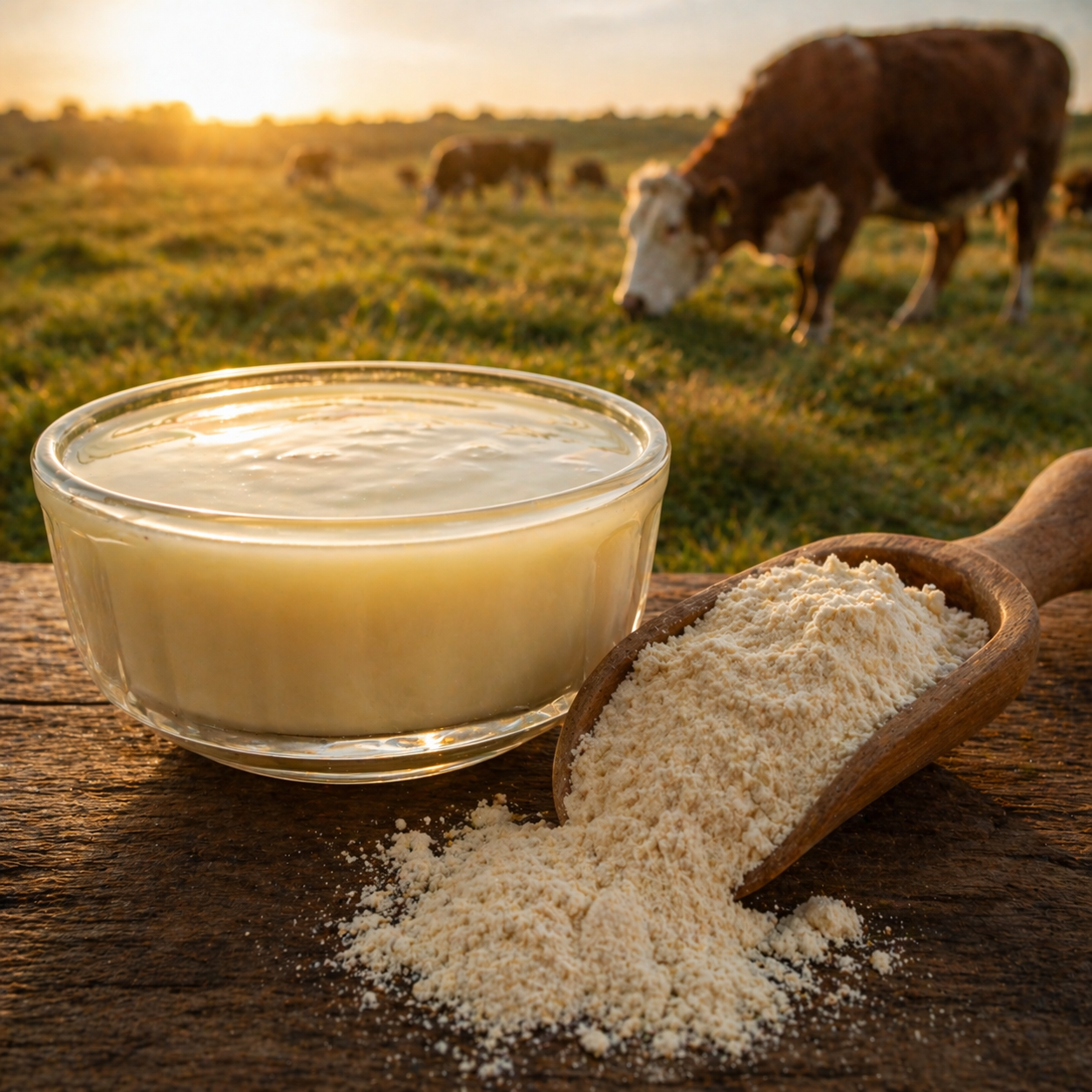
Our Beef Brain is 100 percent pure grass-fed bovine brain including all three glands, the hypothalamus, pituitary, and pineal. Freeze-dried to preserve the full nutrient profile. Nothing added, nothing removed.
It is not a nootropic stack. It is not a formula designed around marketing claims. It is brain tissue from a well-raised animal, in a capsule.
If you are thinking about cognitive nutrition seriously, start with what the brain is actually made of and what it has always run on. Real food, sourced well, in its most intact form.
That is what we make.